
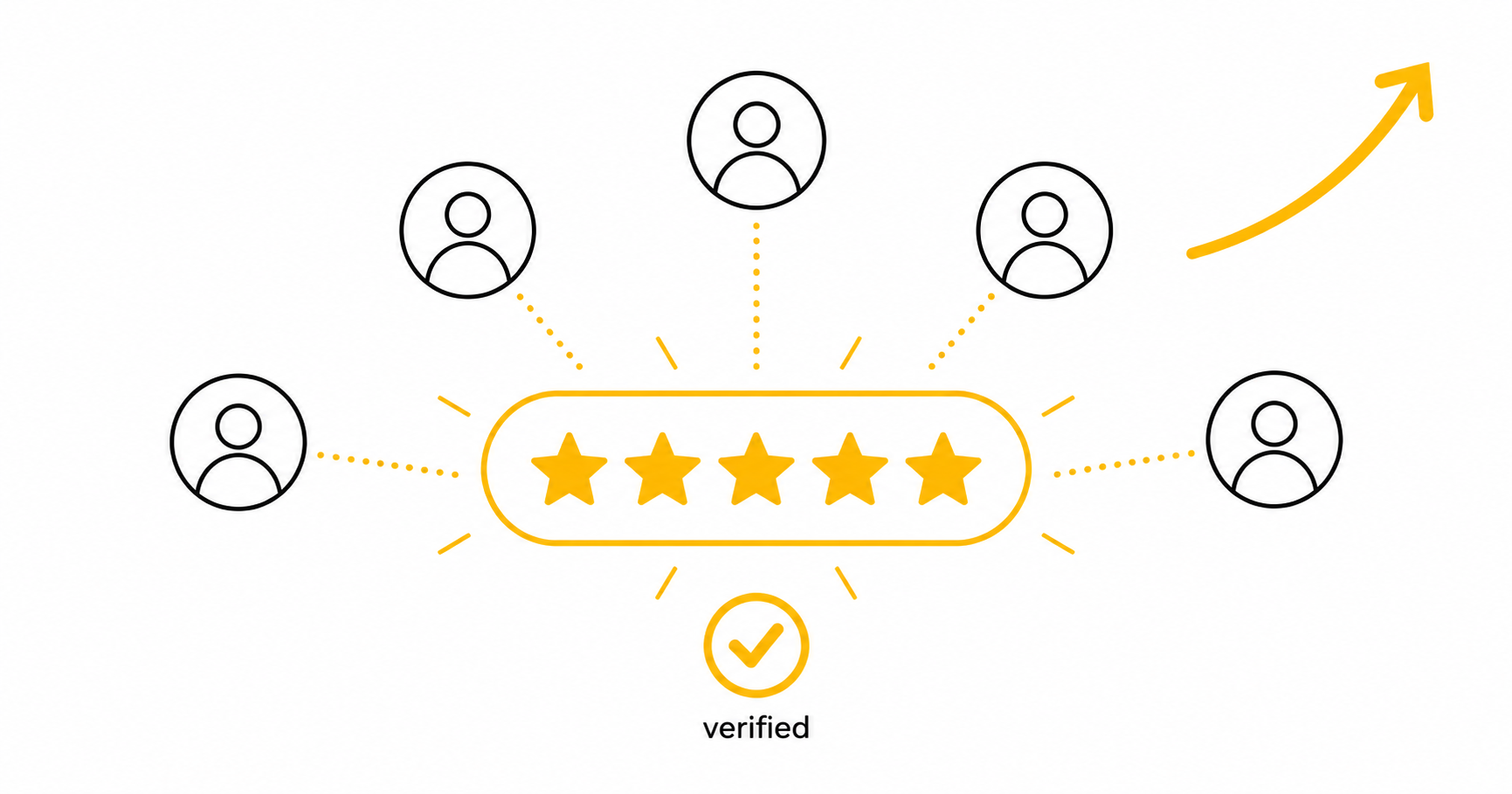
Here's the frustrating truth about genuine reviews: you can't manufacture them. You can only create the conditions that make them more likely to happen.
That might sound less satisfying than "just buy some five-stars and get on with it" - but the businesses that build their reputation on real reviews end up with something much more valuable: a review profile that actually converts customers, holds up to scrutiny, and doesn't carry legal or reputational risk.
So how do you get there? Here's a practical approach that works.
Start with the experience, not the ask
No review strategy will compensate for a mediocre customer experience. Before thinking about how to ask for reviews, it's worth being honest about what you're asking people to review.
The businesses that accumulate the most genuine positive feedback aren't necessarily the ones with the most aggressive review collection processes. They're the ones that deliver experiences worth talking about - clear communication, problems handled well, outcomes that match what was promised.
If you're in a high-risk industry like financial services, this is especially important. Customers who feel genuinely well-served, informed, and treated fairly are far more likely to share that experience. Customers who feel misled, even subtly, won't leave the glowing review you're hoping for - and may leave something else entirely.
Ask at the right moment
Timing is everything. The best moment to ask for a review is when a customer has just had a positive experience - not six weeks later when the goodwill has faded.
For many businesses, that moment is immediately after a successful transaction, a resolved issue, or a completed service. For financial services, it might be after a successful withdrawal, a quick approval, or a support interaction that went well.
Think about your own customer journey and identify where the natural high points are. Those are your windows.
Make it genuinely easy
One of the biggest barriers to leaving a review isn't unwillingness - it's friction. If a customer has to hunt for the right page, create an account they don't have, or navigate a complicated process, most of them won't bother.
Remove the friction. Provide a direct link to your review page. If you're sending a follow-up email, make the link prominent and the ask clear. If you're in a position to ask in person or via chat, have the link ready to share.
The easier it is to leave a review, the more people will do it.
Ask directly but without pressure
There's a difference between asking for a review and pressuring someone for a positive review. The first is fine. The second is problematic - ethically, and in some jurisdictions, legally.
A good review request sounds something like: "If you've had a positive experience with us, we'd really appreciate it if you shared your thoughts - it helps other customers make informed decisions."
Notice what that doesn't say: it doesn't promise anything in return, it doesn't specify "five stars," and it doesn't try to filter out unhappy customers. It's simply an invitation to share an honest experience.
Don't use "review gating" - the practice of only directing satisfied customers to review platforms while steering unhappy ones elsewhere. This is considered deceptive by the FTC and equivalent regulators, and it undermines the integrity of your review profile.
Use follow-up sequences, not one-off asks
Many customers intend to leave a review and simply forget. A gentle follow - up - one, not four - can significantly increase your conversion rate without feeling harassing.
A simple two-email sequence works well: an initial request shortly after the positive experience, and one follow-up a week later for anyone who hasn't responded. After that, let it go.
Respond to the reviews you already have
One thing that's often overlooked: responding to existing reviews - including negative ones - signals to potential new reviewers that their feedback will be read and taken seriously.
When people see that a business engages thoughtfully with its reviews, they're more likely to leave one themselves. And the way you handle criticism publicly tells prospective customers as much about your business as the original reviews do.
Where you publish matters
Collecting genuine reviews is only half the equation. Publishing them on a platform that other people actually trust is the other half.
A review profile on a platform with no verification process is worth less than one on a platform that screens for authenticity - because sophisticated consumers increasingly know the difference. High-risk businesses especially benefit from being listed on platforms where the verification standards are higher, because that credibility transfers to the review itself.
How RedAlertCheck fits into your review strategy
RedAlertCheck is built for businesses that want to build genuine reputations - particularly in sectors where trust is hard to earn and easy to lose.
Our AI-powered verification system means that every review published on our platform has been screened before going live. That has a direct benefit for legitimate businesses: when you accumulate positive reviews on RedAlertCheck, those reviews carry more weight than reviews on platforms anyone can manipulate.
It also means the process is self-regulating. You don't have to worry about a competitor attack campaign distorting your profile, because suspicious reviews won't pass our verification process.
The result is a review presence that actually reflects your business - which, if you're doing things right, is exactly what you want.
Related posts:
- How Do I Ask Customers for Reviews?
- Can Competitors Leave Fake Reviews on Your Business?
- Are Fake Reviews Illegal in 2026?
Comments (0)